
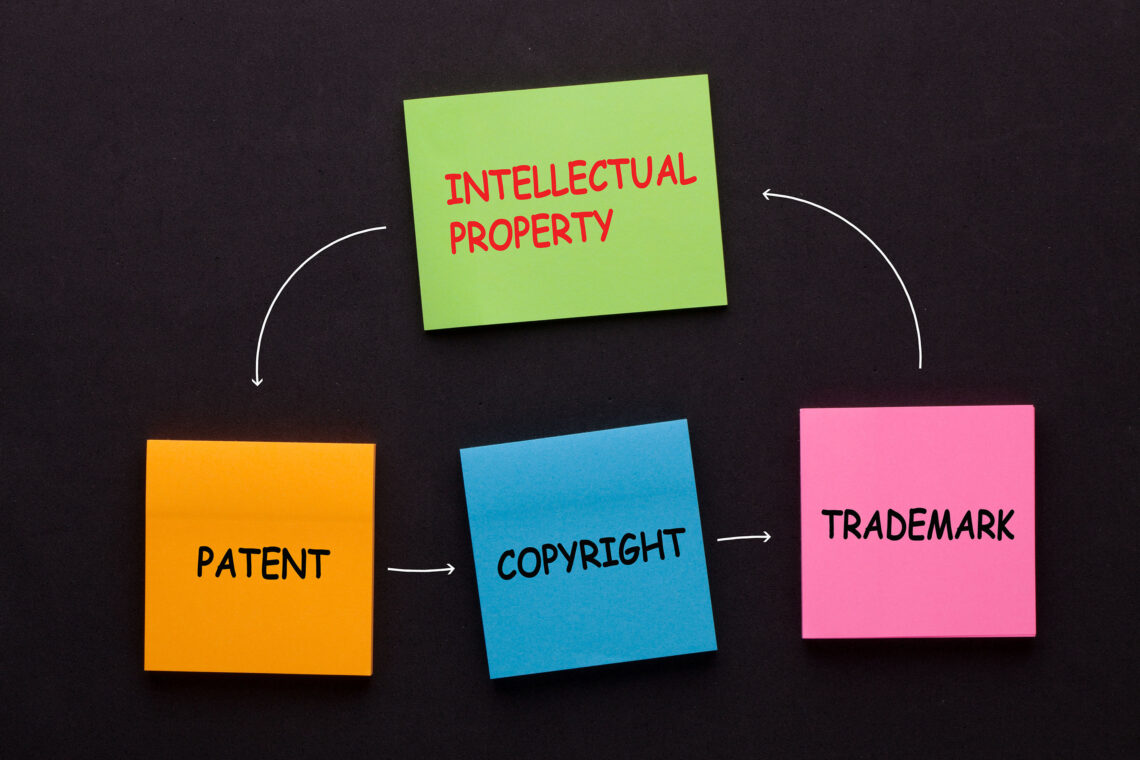
Intellectual property are the intangible assets of a company. You cannot touch these assets like you can with physical assets such as a piece of machinery. Instead, intellectual property are non-physical assets but can be very valuable assets to your company. Learn about the different types of intellectual property your company may have and how to turn them into assets.
Patents vs Trademarks vs Copyrights
| Protects | Think if you have | Lasts for | Examples | |
| Patents | Inventions | New products, machines, or processes of doing something. | Up to 20 years for utility patents, 15 years for design patents. | The light bulb, the telephone, the Apple iPhone . |
| Trademarks | Brand names | Company names, product names, brand names, logos, slogan. | Potentially forever, as long as you keep using the trademark and renew it. | The Apple logo, the Nike swoosh, “Just do it.” |
| Copyrights | Creative works | Books, articles, paintings, songs, software code. | Up to 70 years after the author’s death. | The Harry Potter series, the Mona Lisa, Beethoven’s Fifth Symphony. |
Patents
A patent protects inventions, which can be:
- Products: New devices or machines, like a revolutionary engine design.
- Processes: Innovative methods of doing something, like a novel drug manufacturing technique.
- Compositions of matter: Unique creations like new chemical compounds or plant varieties.
Patents are granted to an inventor who has made an invention that is novel, nonobvious, and useful. If granted a patent, the patent owner is the only person who can make and use the invention. Others who wish to make the invention must get permission from the patent owner.
Trademarks
A trademark protects brands, which can be:
- Words: Brand names like Apple, Google, or Coca-Cola.
- Symbols: Logos, icons, or designs like the Nike swoosh, the Starbucks siren, or the Twitter bird.
- Phrases: Slogans or mottos like “Just do it,” “Melts in your mouth, not in your hand,” or “Think different.”
- Combinations: Any mix of the above, like the McDonald’s golden arches and wordmark together.
Trademarks are granted to individuals and companies who use a word, symbol, or phrase as a brand in selling products or services. The trademark must be in use such as by labeling your product with the trademark. If you stop using a trademark, you will lose it. A trademark cannot cause confusion with other people’s trademarks.
Copyrights
A copyright protects creative works, which can be:
- Literary works: Books, poems, scripts, song lyrics, articles, blog posts, software code, etc.
- Artistic works: Paintings, sculptures, photographs, graphic designs, etc.
- Musical works: Compositions, recordings, musical notation, etc.
- Dramatic works: Plays, movies, TV shows, scripts, etc.
Copyrights are granted to authors who have made an original creative work. This means you must make a new creative work and cannot simply make minor changes to the works of others. A copyright then allows you to control who can copy your creative work.
Conclusion
Intellectual property can be very valuable. Some companies make most of their money from giving others permission to use their intellectual property. For example, a company who doesn’t want to make physical products protected by a patent can collect royalties from other companies who have the capability to make and sell the product. A company can collect fees for allowing others to use a trademarked brand name, think franchises that pay to use a well-known brand. A company can collect fees for allowing others to use a copyrighted story, think the Harry Potter series that has spun off into movies and theme park attractions.
To turn your intellectual property into an asset that you can control and potentially earn fees in allowing others to use, you will want to protect the intellectual property with patents, trademarks, and copyrights. Think about what intellectual property your company may have and discuss protecting them with an intellectual property law firm.
